
March 10th, 2025
Everybody knows jambalaya. It’s famous throughout Louisiana and can now be found in restaurants around the country. I’ve even seen the name jambalaya pop up around the world (usually in a context that has nothing to the rice dish, but still interesting seeing that word in far-away places). Everybody loves jambalaya. It’s like that one cousin of yours that everybody in the family loves because he became a doctor, he doesn’t drink or curse or make dirty jokes, and he’s got a nice house with a loving family in the hometown where he grew up. Everybody loves him, and he deserves it. But what about all the other less famous cousins? What about jambalaya’s lesser-known cousin, pastalaya? How many people outside the family heard of him?
Well, I have. And I love him. He’s my favorite. I almost always prefer noodles over rice, and there’s something about the pasta used in pastalaya that provides more surface area for a depth of flavors that jambalaya could never have. Plus, have you ever made a small pot of pastalaya, for like 2 or 3 people? Neither have I. Making a pastalaya in that big cast iron kettle is I think one of the best excuses to spend an afternoon cooking, drinking (but not that one cousin), and spending time with a bunch of family and friends. To be fair you could do that exact same thing making a jambalaya, but pastalaya is just better.
Now, while the word “pastalaya” hasn’t made its way around the world like “jambalaya” has, local variations on pretty much the exact same dish can be found everywhere. Simple, humble, yet incredibly delicious noodle dishes stir-fried with pieces of meat, or seafood, and vegetables, usually in a light sauce are ubiquitous around the world, especially in Asia. Like Shakespeare said, “A rose by any other name would smell as sweet”. Well boy let me tell you that the Malaysian version of pastalaya, known as char kway teow, smells as sweet and tastes as delicious as it gets. Seriously this is one of my favorite dishes I’ve ever had anywhere.

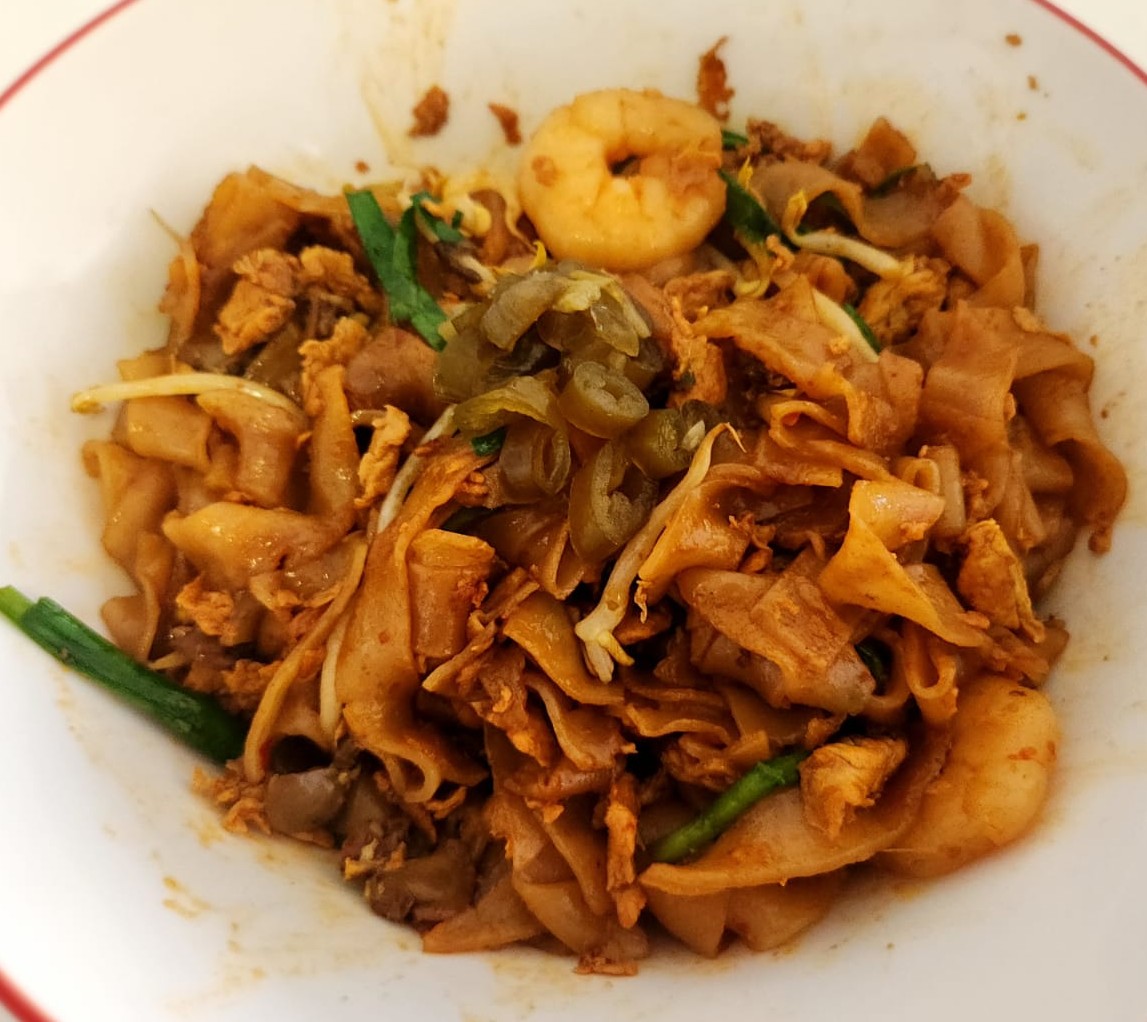
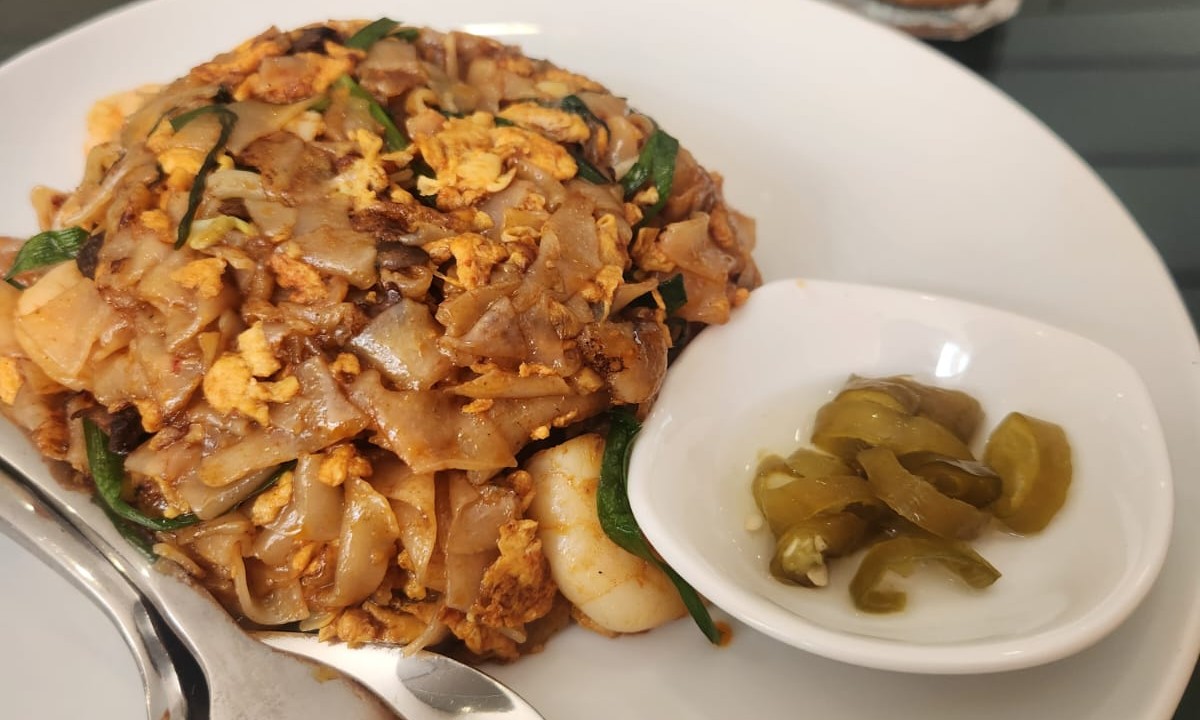
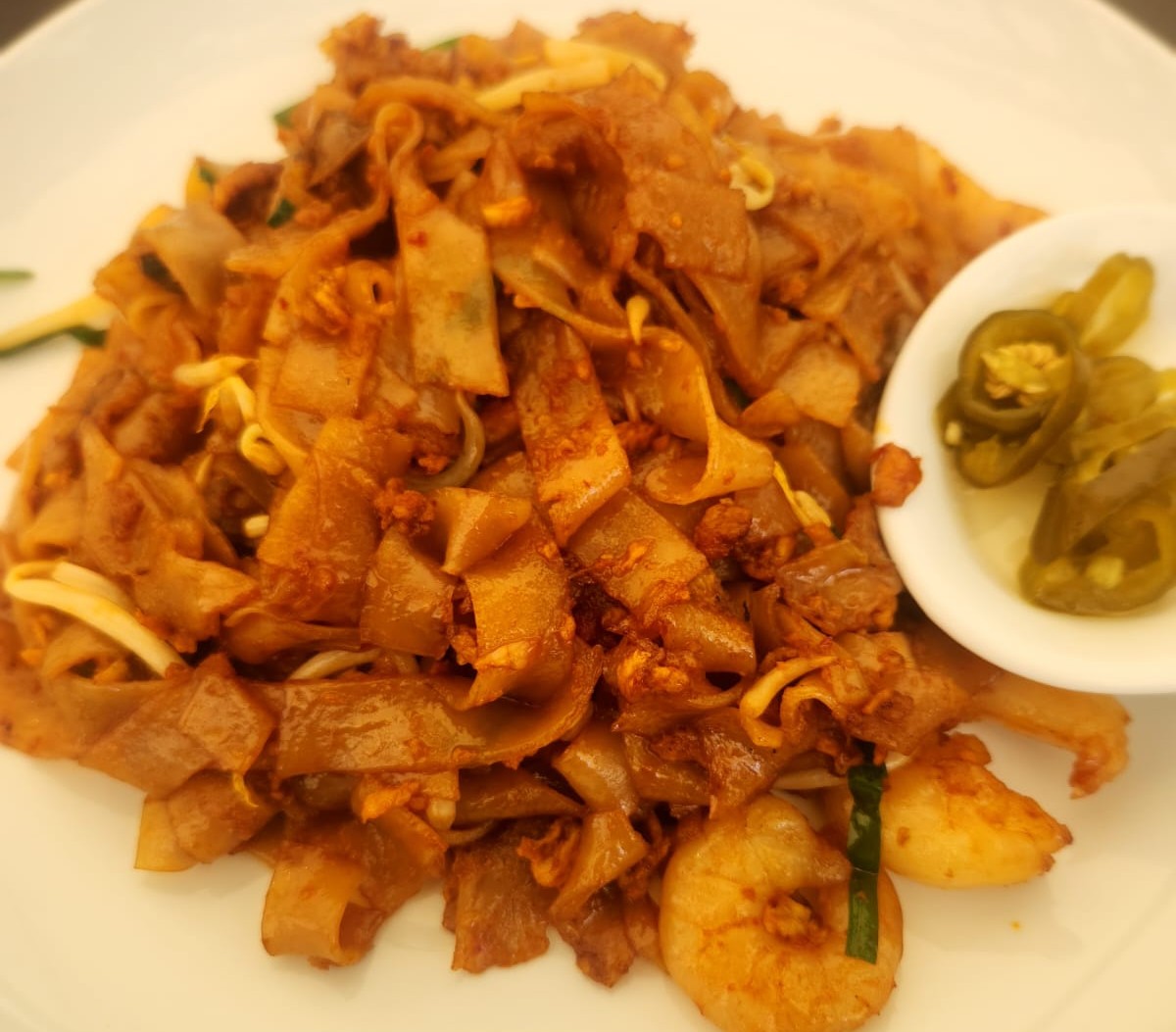
Originating in southern China, but now found throughout Malaysia and Singapore, its name literally translates into stir-fried noodles. Kway teow refers to the flat, wide rice noodles that are always used as the foundation of the dish. Traditionally its stir-fried in pork lard in a very hot wok with garlic, chili paste, shrimp, blood cockles, green onion, and bean sprouts, all tossed in a dark soy sauce-based sauce. You can also find variations of the dish within Malaysia and Singapore that use different ingredients like duck egg, Chinese chives, sliced pork and/or Chinese sausage, pickled radish, leafy greens, or sliced fish cake. My favorite style is Penang style.
The final product is very similar to a properly-cooked pastalaya: the noodles are perfectly cooked (not too soft or al dente) and coated completely in the sauce without being too wet or soupy. Each bite should have bits and pieces of each ingredient used, meaning understanding how to balance the quantity of all the ingredient is critical to a good final product: too many noodles compared to everything else is essentially a plate of plain noodles, and too few noodles means that everything else is on its own and nothing comes together in the end.
Like everything else I’ve mentioned on this blog, balance is key. The way a good char kway teow balances the all spicy, savory, smoky, and slightly sweet flavors, while at the same time not over or undercooking any of the ingredients is truly a work of art. If you get a chance to travel to Malaysia and Singapore one day, make sure to go watch the aunties and uncles at work, the artists, who cook this up like magic in a super-heated wok. And I mean hot like an old school crawfish pot burner type of heat. It’s the intense heat that adds a layer of char or smokiness to the noodles, that just isn’t nearly as good if it’s not charred a bit. Think blackened redfish: that level of hot. If its not hot enough it’s just grilled redfish, which is good in its own right. But I don’t remember a grilled redfish craze that almost made the species go extinct in Louisiana. That was blackened redfish.
Char kway teow comes together so fast, the movements and timings are so precise, that you can’t help but appreciate how special this dish really is. I’ve had char kway teow so many times, from so many different restaurants and food stalls now that I’ve lost count. It’s amazing, but I really can’t remember a single version that I didn’t like. In Malaysia you can often find it dry or wet, but stick with the original, dry version; it’s too hot there to eat soup. A couple of my favorite places include Ah Leng Char Koay Teow and Siam Road Charcoal Char Kuey Teow in Penang, Kuching Taste Restaurant and Terrace by Gleneagles in Johor Bahru, and Hock Huat Fried Tway Teow in Singapore.
How ya make it?
Yall gonna love this one. Don’t be intimidated by the seemingly complex technical requirements of putting this together: if you have all your ingredients prepped and ready to go before you start cooking, then this will come together fairly easily. And honestly, I think cooking a big pastalaya is much more difficult than this.
Let’s address the elephant in the kitchen: what the hell is a blood cockle and why is that something I would want to eat? A cockle is just a small clam that you can find all over coastal Southeast Asia and is a common ingredient in a lot of dishes in that part of the world. While the traditional version of this dish almost always has them, you don’t need them. So don’t worry about it. They taste like mini, raw salty oysters, but they’re so small most times you don’t even notice them.
Wait that’s not the elephant in the kitchen you were wondering about? Oh, a wok; you don’t have one. No problem. Just use a wide enough pan that you can toss all the ingredients together, or better yet, go fire up that cast iron kettle in the garage that make pastalaya and kettle corn in that you keep behind the welding machine and make it in that. Get it as hot as it will get, prep all of your ingredients, follow this recipe (and others you find online), and you’ll be fine.
The most important ingredient here is the flat, wide rice noodles. You can find these just about everywhere now, especially in Louisiana. This is the same noodle that the Vietnamese use for dishes like drunken noodle (more on that in a later post). For two people you’ll need use about one 16-ounce pack. Prep the noodles according to what the package says (mais use Google translate); this typically involves soaking the noodles in warm water for about 15-20 minutes to soften them up. The second most important ingredient (in my opinion) is the pork lard. If you have it, or can find it, use it.
From there you’ll need about five cloves of garlic minced up very fine, a handful of whole, peeled fresh Louisiana shrimp, a tablespoon of some sort of chili paste like siracha, one beaten egg, a cup of fresh bean sprouts, and a few tablespoons of chopped green onion. If you can, try to find the bean sprouts, they really do add a nice crunchy, nutty flavor to the dish that can’t really be matched by anything else. For the sauce you want to mix two tablespoons light (regular) soy sauce, ½ teaspoon dark soy sauce, and ½ teaspoon of oyster sauce together, with a pinch of sugar. You’ll want to keep all of these ingredients separately, because they will be added to the wok individually, at separate times.
To start cooking you need to get the wok/pan/pot smoking hot (turn on the fan or cook outside so you don’t get yelled at). Make sure everything you need is nearby because this will come together very quick. Once the pan is hot add about three tablespoons of lard, the chopped garlic, and stir. After a few seconds, before the garlic starts to brown, throw in the shrimp and chili paste, and cook the shrimp for about a minute, or until pink all around. Take em out and set aside. Add the rice noodles (that you pre-soaked or cooked so that they’re already soft) to the pan and the sauce mixture and stir continuously to combine. You wanna make sure all the noodles are coated in the sauce. After a minute or so, push aside the noodles to clear a space on the bottom of the pan and pour in the beaten egg. Give it about 5 seconds to cook, then start to stir it into the noodles. After stirring this for about 30 seconds, add in the bean sprouts and green onion, and put the shrimp back in. Mix this all together thoroughly for another 30 seconds and it’s done. Move quickly to a plate so that it doesn’t continue cooking and enjoy.
Don’t worry if you made a mess or smoked out the kitchen. They gonna stop yelling at you when they taste how good char kway teow is. And after you do this recipe a couple of times, the skills you learn with fast cooking in a super-hot wok/pan can be translated to countless other dishes. And don’t be afraid to try other local, Louisiana ingredients the next time you make this. I’m thinking very thinly sliced andouille and a half teaspoon of Steen’s cane syrup in the sauce mixture.
Allons manger!
 The Cajun World Eats
Leave a comment