
February 3, 2025
Remember when Tante would bring that side dish of okra smothered with tomatoes and andouille to family gatherings in the summer? When she told you you had to try a little bite, and you said you didn’t like okra because it was too slimly? And then you looked over at ole Nonc for backup, but he walked away because he thought it was too slimy too, but didn’t want to say anything?
Well, I’m here to tell you it’s ok to be wrong. Without being wrong we would never grow, never learn, and – most importantly for me – never have tried Greek-style okra. Just like ourselves, our tastebuds age and mature so that the foods we didn’t like as kids sometimes we can’t get enough of them as adults. Okra is definitely one of those for me. Not only is okra good for you, but it’s versatile, delicious, and can be found in cuisines around the world. Sure, it can be slimy, but there are ways to reduce the slime (keep reading) or utilize it as a thickening agent: think shrimp and okra gumbo. On top of that, I think it’s one of the easiest vegetables to grow and thrives in that south Louisiana heat. Just remember to not to forget to pick them too late or they’ll turn woody and gross.
Just like in Louisiana, okra crops thrive in the warm Mediterranean climate of Greece. You can find it just about everywhere throughout the country, and as far as I know it’s cooked in a pretty similar style everywhere there: low and slow, usually with an acid (vinegar, tomatoes, lemon juice). And like most meals in Greece, it’s served with a side of good rustic bread and feta cheese.
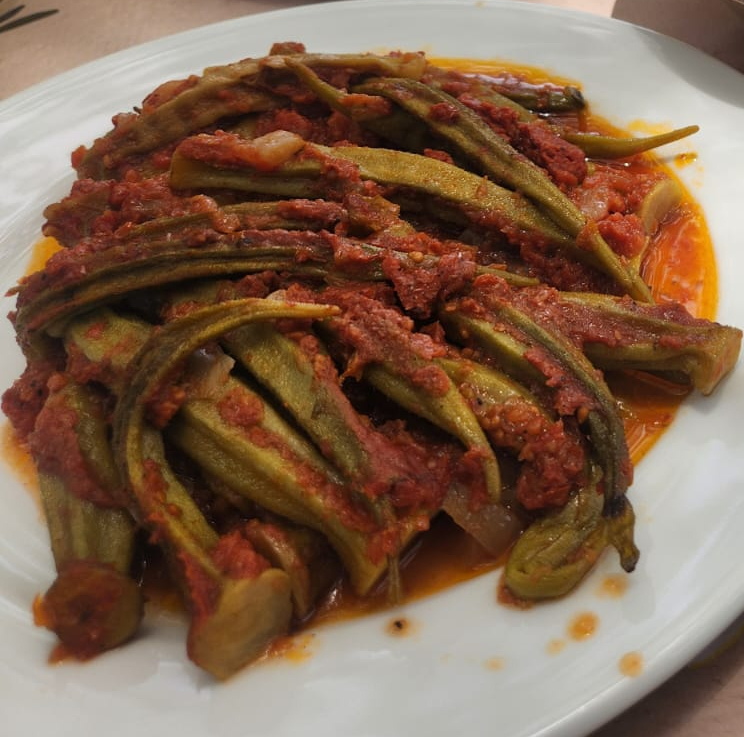
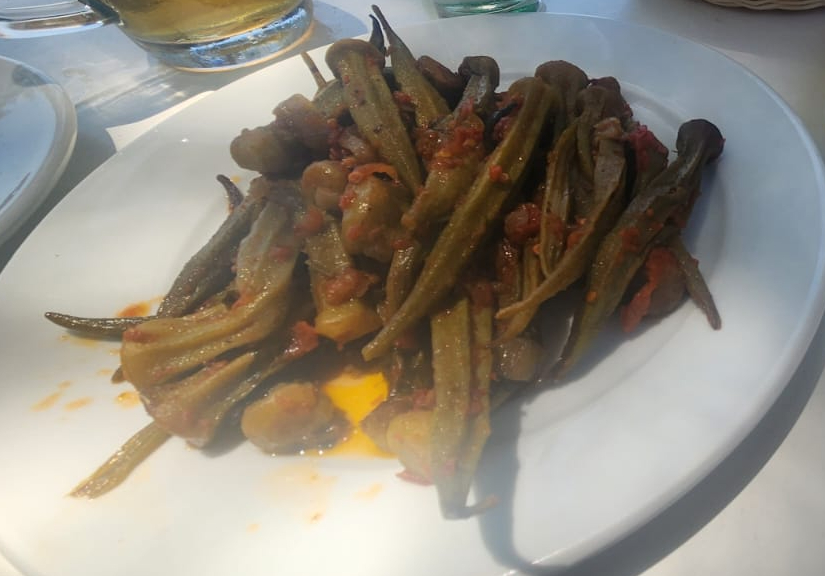
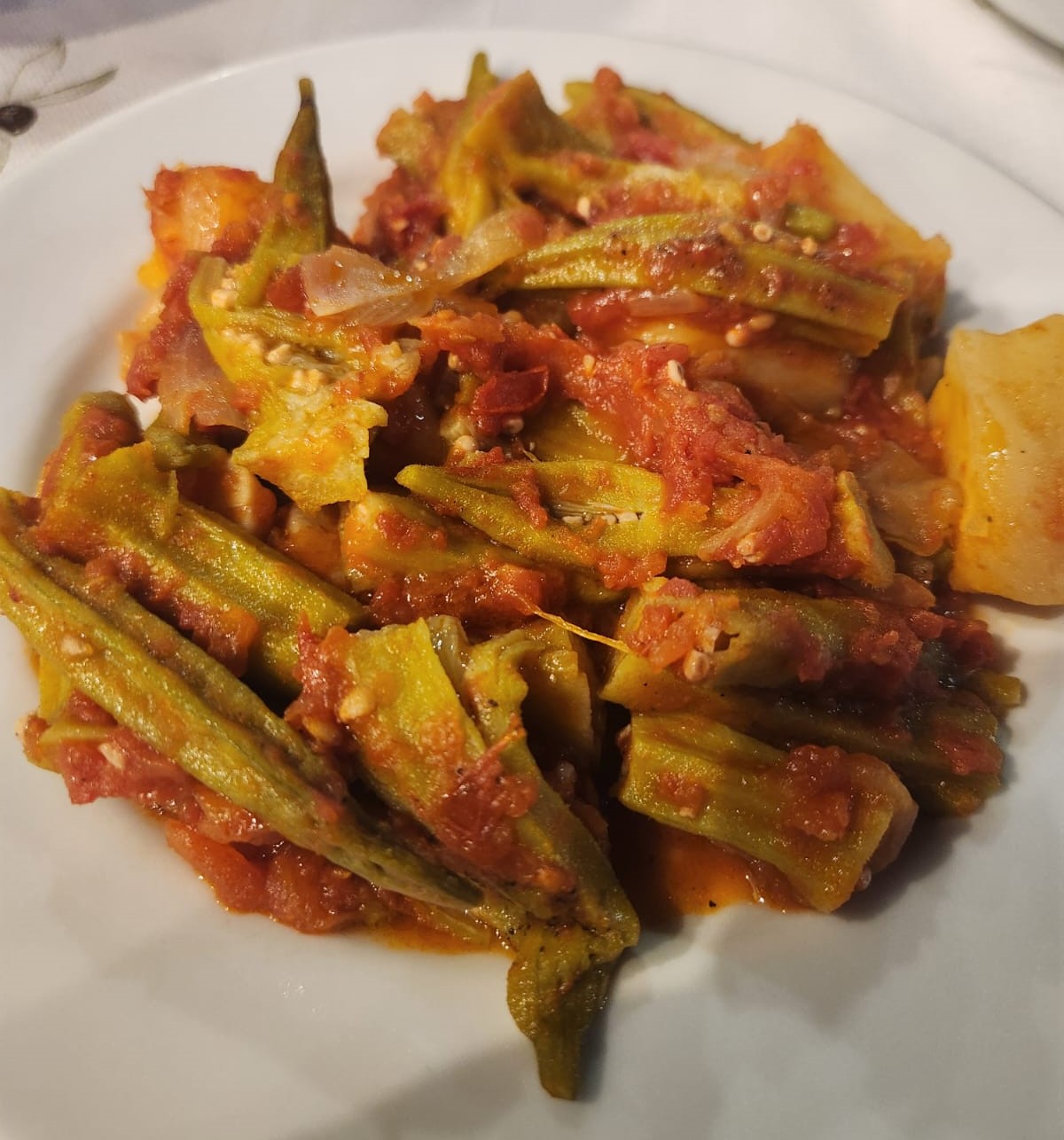
The Greek version of okra stewed in tomato sauce is nearly identical to the Cajun version of smothered okra, just without the andouille. The first time I had okra in Greece, I was blown away by how soft the tender the texture was. It was like that feeling when you eat cotton candy, where it just dissolves in your mouth in a burst of flavor. That’s how tender the okra was: it just dissolved away when you ate it, yet was intact enough to serve on a plate and pickup with a fork. I’ve tried and tried since then to recreate that texture, but still to this day I can’t get it exactly how it was. Of course, you can cook it down till it gets soft-soft, but for me it always breaks up at some point. I figure it must be one of those ubiquitous old grandma secrets that might as well be magic.
If you like okra in south Louisiana, then you’d love it in Greece.
How you make it?
Yeah, but what about the slime? Around the world there are different ways to get around or reduce the slime in okra. If you cut your okra into smaller pieces, you could add an acid, like lemon juice or vinegar, to the okra before you cook it; let it soak for a bit then drain. Or you could pan fry the okra pieces separately, just till it gets light brown around the edges, let them drain over paper towels, and then add to whatever dish you’re making. Of course you could deep fry them till crispy on the outside, but that’s another thing entirely.
There’s one more thing you could do, that in hindsight makes perfect sense, but I never realized until I ate okra in Greece: cook them whole. By leaving the okra whole, you keep most, if not all, of the slime on the inside.
This recipe couldn’t be easier in terms of ingredients: okra, tomato, onion, salt, sugar, and oil. You start off by trimming the woody bits of the okra tips and stem caps (leave a little of the cap on), careful not to expose the inside. Once trimmed wash and soak the okra in a mixture of water and vinegar (red wine or plain white). After soaking for a couple of minutes, drain, and place on a single layer on a baking sheet. You wanna put these in a low (325F-350F) oven for a few minutes, just to get dry (you don’t want to cook them at this point). Once dry, remove from the oven and set aside.
Now, in a large pot sauté a chopped-up onion in some oil (preferably olive oil) until soft and translucent. You know the routine. Then add the tomato sauce, paste, diced tomatoes, or a combination of all three. It doesn’t really matter which one. As long as the acid from the tomatoes is in there with the okra, they will balance each other nicely. For a pound of okra, use about a cup of the tomato ingredient of your choice (less for paste only). Here I would add a big pinch of sugar, and sauté everything for a bit, until the oil from the tomatoes starts to separate.
At this point add your now-dried okra, about a quarter cup of water, and stir to coat. Let it cook, covered, on low for about 45 minutes to an hour. What’s important here is that after about 20 minutes of cooking, when the okra starts to get soft, you want to stir it as little as possible. If need be, keep adding little splashes of water throughout the cooking process, until the okra is very tender. For stirring, the best thing to do would probably just shake the whole pot to make sure nothing is sticking to the bottom. Trust me this is easier said than done. I still don’t know how they did it in Greece, but my okra always tends to break up a bit toward the end.
Whether the okra breaks up a little or not, cook until very tender, yet to the point while most of them are still whole. Turn off the heat. Maybe sprinkle a little chopped parsley on top if you’re feeling fancy. Serve with a side of rustic bread, or like everything else in Louisiana, rice, and enjoy. And if you got some feta cheese in the fridge, put a little of that on the side to eat with it. Trust me, the Greeks know how it’s done.
Allons manger!
 The Cajun World Eats
Leave a comment