
6 September, 2024
Now this one is a deep dive from Southern Malaysia. Kacang pool, which translates to “pool of beans”, is a Malaysian version of a middle eastern dish called ful medammas, which uses foul medammas (another name for fava beans) as the base ingredient. Now I know what you’re thinking. Foul medammas? Mmm, that sounds good, like something I’d definitely want to eat. Stay with me here. Both the Malaysian and original version of this dish are delicious and very relatable to Cajun appetites.
The middle eastern version is a meatless dish, usually eaten for breakfast, made of fava beans cooked down with local ingredients and spices like garlic, onion, chopped parsley, and cumin. It kinda has the look and consistency of a bean dip or refried beans from Latin America, and is typically served with pieces of pita bread or vegetables to dip with. A refreshing, humble, and hearty start to the day.
Now the Malaysian version, kacang pool (pronounced “ka-chang pool”), from the southern state of Johor, is prepared in a similar way to the original dish, and is also eaten for breakfast, usually. But what caught my eye were two distinct differences: it can be, but not always is, made with ground beef; and comes with a thick piece of buttery, garlic bread for dippin. It’s definitely one of those home cooked staples, so you don’t really find it in too many restaurants there. If you ever do visit Malaysia and it’s southern state of Johor (which, if you can, you absolutely should) you could try this dish at Restoran Kacang Pool Haji near the Larkin bus terminal in Johor Bahru. If not, it’s pretty easy to make at home and well worth your time.
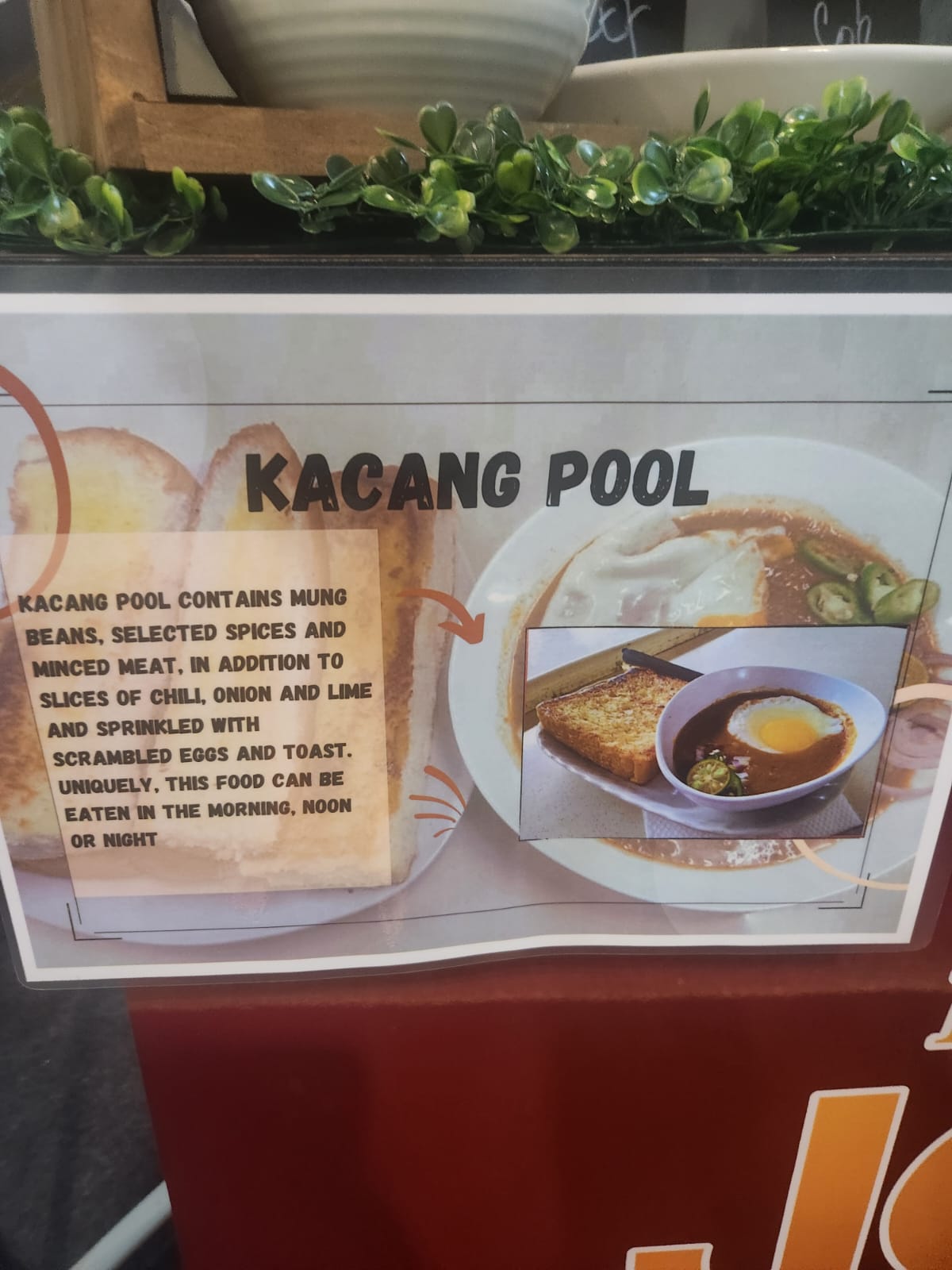
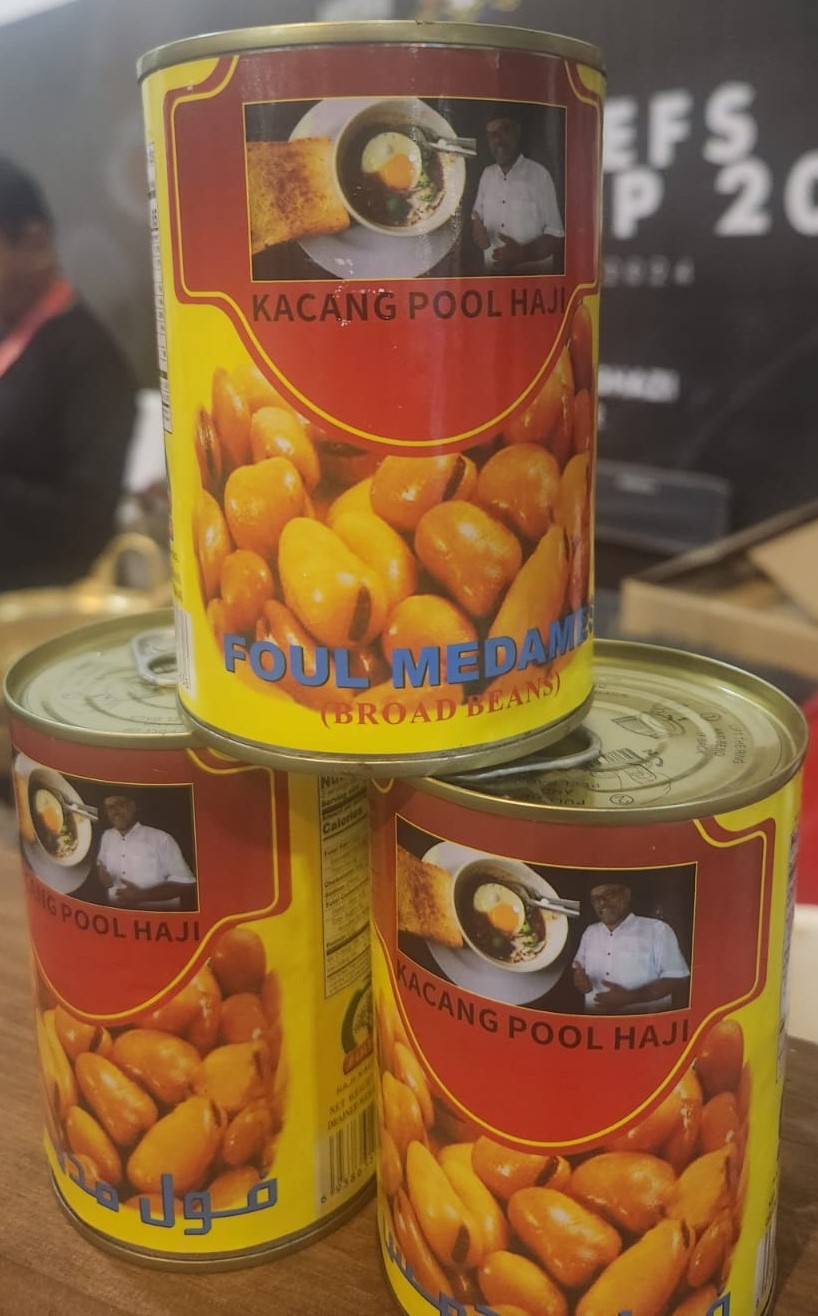
The first time I had this dish was by complete chance; I didn’t seek it out or even knew it existed before. I was at a local cooking competition in Johor Bahru, Malaysia, and in the back of the room there were a few food stalls cooking and giving out samples of some local dishes. I noticed that one of those stalls had a big stack of canned beans out front. (Stacks of canned beans? Wow, this is some intriguing food writing). What really caught my eye was the thick pieces of toast grilling on a flattop giving off that unmistakable cooked garlic and butter smell. I had no idea what I was getting into, all I knew was that I wanted that toast. I politely asked for satu (one) of whatever it was they had, and they handed me a piece of toast, with a small bowl of some brownish-red dip-looking stuff. Honestly, it didn’t look that good.

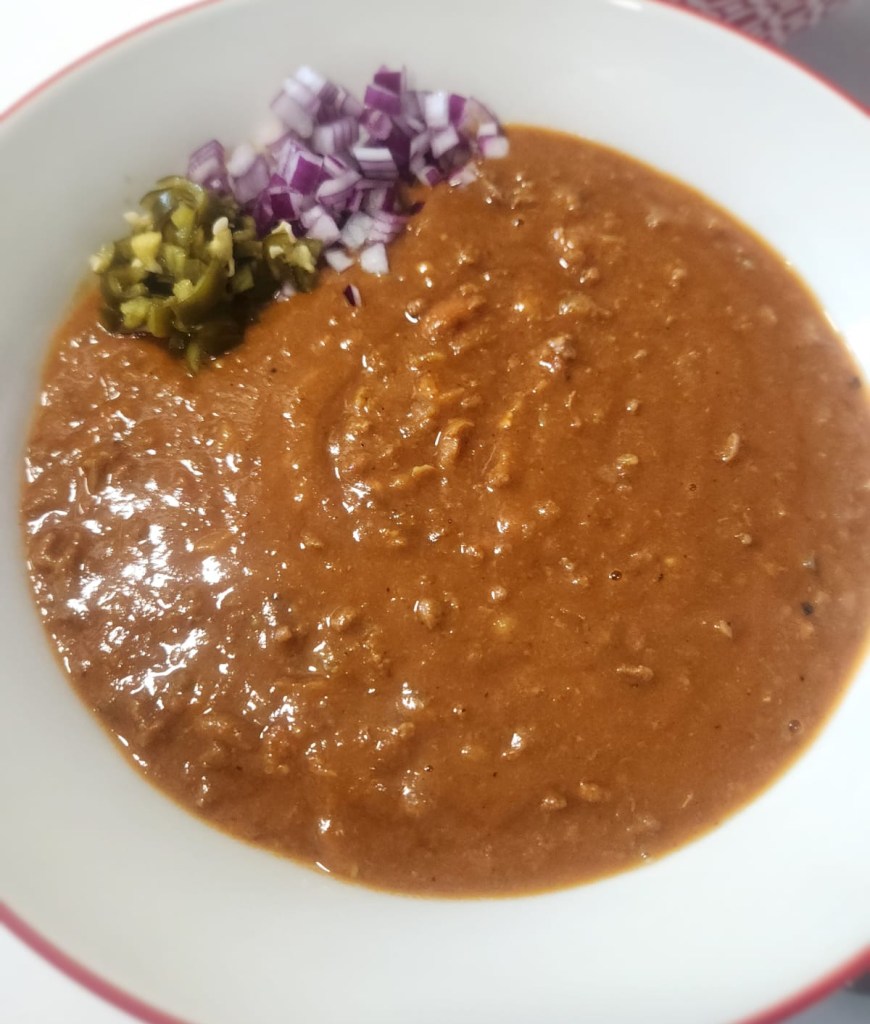
But that first bite? I just wasn’t ready for how unbelievably good it was. How could something that looks like this could be so deeply flavorful and complex? Not only that, but I wasn’t ready for the memories it immediately stirred up of a dish from back home. My first thought was of BBQ baked beans back home in South Louisiana. Now I ain’t talking about the ones straight out of the can. I mean the ones like tante used to make and bring to BBQs that were made with ground beef and topped with strips of bacon and long-cut slices of red weenies, that was baked in the oven until it all came together. Hell, you didn’t even need to be having a BBQ to bring those to the party: they were good for any occasion. And – red weenies aside – while I know that BBQ baked beans with ground beef is not specific to South Louisiana (you can find throughout the Southeast U.S.), it’s still pretty popular in Cajun Country.
But just like that, on the opposite side of the world, the tastes and memories from back home came flooding back in. Not only that, but the timing was weird because I had just been thinking that it was hard to find white navy beans, dried or canned, in Malaysia. I had been wanting to make that BBQ baked bean casserole while I was living there, but was having trouble finding the key ingredient. Now I knew that I didn’t need them. I could make an equally as good local version of a very similar dish, and fill that red weenie void.
While the taste between the two may not be exactly the same (kacang pool is not nearly as sweet as BBQ baked beans), the texture was identical. It was the ground beef mixed in a thick, saucy, bean-based suspension (if the term bean-based suspension doesn’t make you hungry, I don’t know what will). The flavor of this dish wasn’t exotic or foreign at all. Instead, it’s a rich, hearty, perfect blend of the ground spices mixed with the fatty richness of the ground beef. It, like so many other things I’ve eaten on this side of the world, was complex in flavor, yet perfectly balanced. And to add to the flavors, on top there was finely chopped pickled green chilies (local name: cili jeruk) and red onion, and a fried sunny-side-up egg laid right on top.
All of that together was a perfectly delicious meal in its own right. But what really seals the deal is that buttery toast on the side. Why use a metal or plastic spoon to eat this when you can use one made of buttered bread instead? Plus, back home when someone made a big dish of BBQ baked beans with ground meat, there seemed to always be slices of garlic bread nearby.
How ya make it?
If you using canned beans, DON’T DRAIN THE LIQUID FROM THE CANS. Alright now that we’ve established that, while this one ain’t hard to make, it might introduce a new technique to you: blending the vegetables that you would usually sauté first (like Cajun trinity), then sauteing the blended mixture before doing anything else. This is common in Indian and Malaysian cooking especially when making a curry or other sauce-based dish, and it helps bring out all the flavors better and leads to a smoother final product.
So get your blender out. Roughly chop one medium yellow onion and one medium red onion and throw in the blender. Add a couple cloves of garlic in there. Cut a 1-inch piece of ginger and take the skin off with a spoon, just like your paran taught you to take the scales of a sac-a-lait. Throw that scaleless ginger in the blender. Put just enough water to help mix, then blend till as smooth as you can.
Get you some curry powder from the grocery. Mais, I know they got that now. They should also have ground coriander powder (not dried cilantro leaves). If they do, grab it. If not, don’t worry about it. Add about two tablespoons of each of that to a bowl. Then add about a teaspoon of cumin. Mix those up with just enough water to make a thick paste.
Next, heat equal parts cooking oil and butter over medium heat (Malaysians probably use ghee here, which is just clarified butter; regular butter will be fine though). Once hot add the blended veggies and saute for a few minutes until they start to brown a bit. Then add the curry paste mix and saute for a minute or two to release the flavors. It’ll start smellin real good about now.
At this point add the ground meat (about a pound is fine). While in Malaysia they use ground beef for this dish, you could probably use any sort of ground meat you want. A beef/pork or deer/pork mix might work good. Cook until heated all the way through, probably 5 or 6 minutes.
After that add your beans WITH THE LIQUID. The Malaysian version uses canned fava beans (foul medammas), but canned lima beans (butter beans in South Louisiana) or regular baked beans might work well, especially with a little sweetness from the baked beans. You could also use a combo of any of the above canned beans. Just keep in mind that for a pound of ground meat, use two regular sized (16 oz.) cans of beans for the right ratio.
Once the beans have been added you can mash them up a bit with that permanently-stained wooden roux spoon that you use for everything, to help thicken the dish up. Wash out the cans with a bit of water and add to the pot. Bring up to a boil, then put on low and simmer for about 15 minutes. Keep in mind the final consistency shouldn’t be soupy, nor should it be pile-up-high-on-a-plate thick. Aim for somewhere in between. If it’s too thick add some water, a little bit at a time, to bring it to the right consistency. If it’s too thin, put the heat up a little more and cook off some of that water with the lid removed.
However you get there, once you got there season with salt and pepper to taste and take off the heat.
For your toppings you could do a whole bunch of stuff. The Malaysian version usually has finely chopped red onion and pickled green chilis. A good substitute might be finely chopped up shallots and/or pickled jalapeno pepper. Fry you up a sunny side up egg to put on top too. Before you dig in, try a squeeze of a piece of lime.
For the toast, get you one of those frozen boxes of Texas toast from the grocery. Whatever bread you use, make sure it’s thick cut and buttery.
Allons Manger!
 The Cajun World Eats
Leave a comment